






All family matter
ByExplorer
Encouraging a Love of Science in Young Children
Share your love
For many Singaporean parents, science can feel like a subject that becomes important only when children enter primary school. In reality, a love of science often begins much earlier, through simple moments of curiosity at home, in the park, or during everyday routines. When young children ask why the rain falls, how plants grow, or why ice melts, they are already thinking like little scientists.
Early exposure to science helps children build observation skills, confidence, and a natural willingness to explore the world around them. In Singapore, where education is highly valued and future-ready skills matter more than ever, nurturing curiosity from a young age can support both academic growth and lifelong learning. The good news is that parents do not need expensive equipment or advanced knowledge to get started. With the right mindset, a few simple materials, and access to local resources, science can become a fun and meaningful part of family life.
Why Early Exposure to Science Matters
Young children learn best when they can touch, test, ask questions, and see results for themselves. Science supports all of these habits. Whether a child is watching ants carry food, mixing colours in water, or noticing the shape of leaves, they are learning how to observe patterns, make predictions, and think critically. These are important skills that go far beyond one school subject.
Science also helps children develop confidence in problem-solving. Instead of worrying about getting the right answer immediately, they learn that it is okay to try, make mistakes, and try again. That mindset can be especially valuable in a high-pressure environment where some children may begin to feel that learning is only about scores. A positive early experience with science can help children approach future lessons with curiosity rather than fear.
For families in Singapore, this foundation can also make the transition into primary school science smoother. Children who have already explored basic ideas like floating and sinking, plant growth, weather, or the five senses often find it easier to connect classroom concepts to real life. This does not mean pushing formal lessons too early. Instead, it means giving children repeated chances to notice how the world works in a playful and age-appropriate way.
Common Concerns Singaporean Parents Have About Science Education
Many parents want to support science learning but are unsure where to begin. One common concern is that science may be too advanced for preschoolers or younger children. In fact, science for young kids does not need to involve complicated theories. It can be as simple as asking what happens when water is frozen, why shadows change, or which objects stick to a magnet. These small experiences are often the best starting point.
Another concern is screen time. Many parents search for educational apps or videos, but worry that too much passive viewing may not truly engage their child. While digital resources can be helpful, hands-on discovery usually leaves a stronger impression. Children remember far more when they pour, sort, build, plant, and explore with their own hands.
Some parents also worry about mess, safety, and time. Understandably, not every family wants to set up large kids science experiments at home after a busy workday. The encouraging reality is that many science activities take only ten to fifteen minutes and use materials already found in the kitchen. A simple experiment with water, paper towels, fruit seeds, or torchlight can spark meaningful learning without becoming stressful.
There is also the question of whether enrichment is necessary. In Singapore, with many tuition and enrichment choices available, parents may feel pressure to sign up early. While science enrichment Singapore programmes can be useful for some children, home-based curiosity and regular exposure are just as important. Enrichment should complement a child’s interest, not replace the joy of discovery.
Practical Ways to Encourage a Love of Science at Home
One of the best ways to build interest in science is to make it part of daily life. Cooking, bath time, gardening, and walks to the playground all offer opportunities for scientific thinking. Parents can ask simple questions such as, “What do you think will happen next?” or “Why do you think that changed?” These moments teach children that science is not limited to textbooks or classrooms.
It also helps to focus on questions rather than perfect explanations. Parents do not need to know every answer. In fact, saying “Let’s find out together” can be even more powerful. It shows children that learning is an active process and that curiosity is something to celebrate. This is especially helpful for children who may feel unsure or intimidated by new topics.
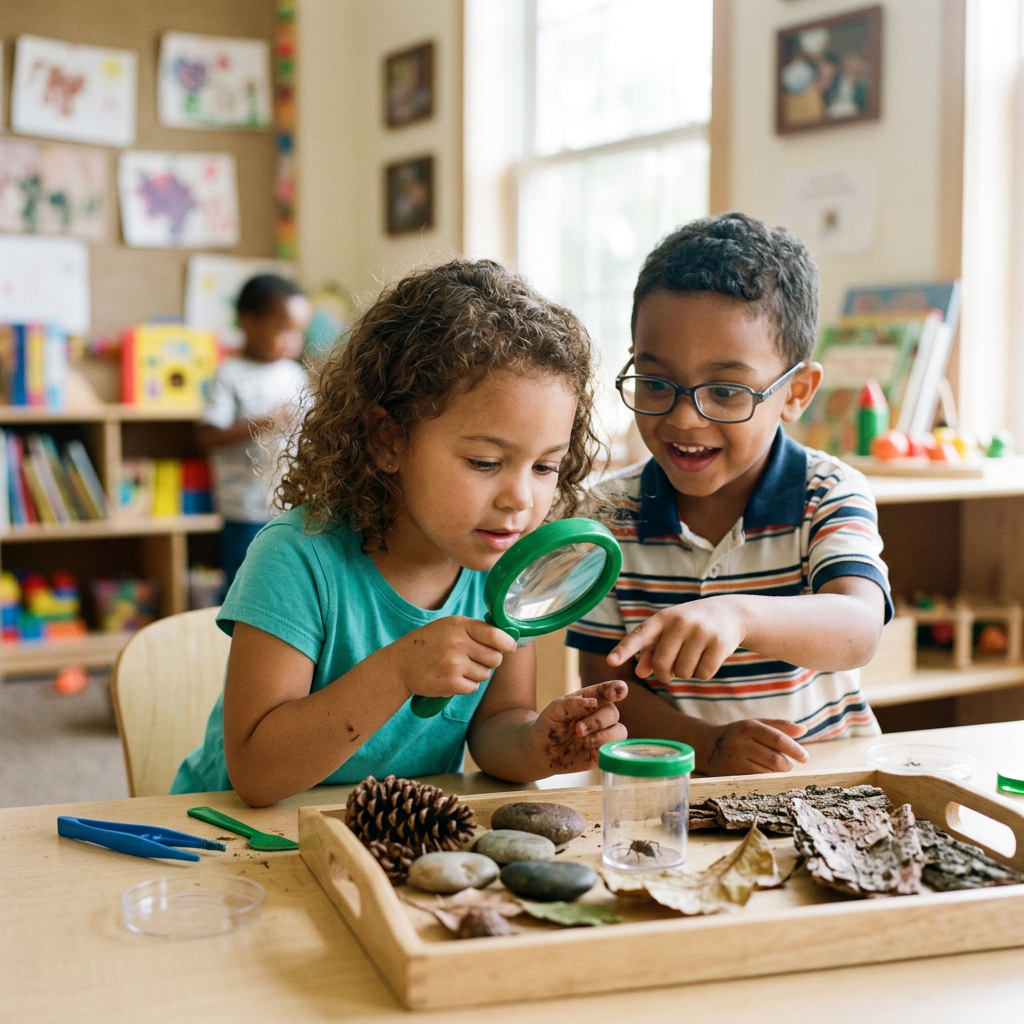
Another practical strategy is to keep materials accessible. A small box with magnifying glasses, magnets, recycled containers, droppers, measuring cups, and paper can inspire spontaneous exploration. Children are more likely to engage when tools are easy to reach and activities feel inviting rather than formal.
Families can also bring science outdoors. Singapore’s parks, gardens, and nature spaces provide excellent opportunities for observing insects, clouds, trees, puddles, and changing weather. These outdoor experiences naturally support science activities Singapore families can enjoy without much cost. They also help children connect learning to the environment around them.
Easy Science Activities Parents Can Try
Parents looking for simple ideas can begin with water-based experiments. Ask children which objects will float or sink, then test their predictions using spoons, toy blocks, leaves, and bottle caps. This type of activity introduces observation, comparison, and basic reasoning in a playful way.
Ice experiments are another easy option. Freeze small toys in ice and let children figure out how to melt the ice faster using water, salt, or sunlight. Not only is this fun, but it also introduces ideas about temperature and change. These are classic kids science experiments that work well for a range of ages.
Plant-growing activities are ideal for building patience and responsibility. Children can grow green beans from cotton wool, observe roots forming, and record changes in a simple notebook. This supports early understanding of living things and can later connect well with primary school science topics.
Parents can also try shadow play, magnet hunts, or weather charts. A torchlight and a few household items can help children explore how shadows change size and direction. Magnets can be used to sort objects around the home. A daily weather chart helps children notice patterns in rain, sunshine, and clouds, which is especially relevant in Singapore’s tropical climate.
Choosing the Right Science Support for Your Child
Not every child needs structured lessons early on. For many young children, home exploration, library books, and occasional visits to science-related attractions are enough to build a strong foundation. If a child shows sustained interest, asks many questions, or enjoys building and experimenting regularly, parents may then consider additional support.
When exploring science enrichment Singapore options, it is worth looking beyond worksheets and memorisation. Strong programmes usually include hands-on activities, age-appropriate inquiry, and opportunities for children to explain their thinking. A good class should leave children more curious, not more anxious.
Parents should also think about their child’s learning style. Some children thrive in group settings, while others prefer quieter one-on-one exploration at home. The right approach is the one that keeps science engaging and sustainable. Even if enrichment is used, it works best when paired with everyday conversations and practical experiences.
This balanced approach supports broader STEM education Singapore goals as well. Science is not only about preparing for exams. It is about helping children become thoughtful, observant, and creative thinkers who are comfortable exploring new ideas.
Local Singapore Resources for Science Learning
Singapore offers many family-friendly resources for science learning. One of the best-known options is Science Centre Singapore, which features interactive exhibits that make scientific concepts more accessible to children. It is a great place for families to turn abstract ideas into hands-on experiences.
For younger children, KidsSTOP is especially valuable. Designed for children aged eight and below, it offers play-based zones that introduce science through movement, role play, and experimentation. This can be an excellent first step for parents who want their children to experience science in an engaging and low-pressure environment.
Public libraries in Singapore are another useful resource. Many libraries carry children’s books on animals, space, weather, inventions, and simple experiments. Parents can borrow a few titles regularly and rotate them based on their child’s interests. National Library Board programmes and holiday activities may also provide opportunities for hands-on learning.
Other helpful places include Gardens by the Bay, the Singapore Botanic Gardens, and community-based workshops during school holidays. These outings support science activities Singapore families can enjoy together while reinforcing observation and discovery.
Parents can also explore relevant websites, including Science Centre Singapore, the National Library Board, and educational resources from Singapore-based enrichment providers. When used thoughtfully, these can complement home learning and strengthen children’s exposure to STEM education Singapore opportunities.
Helping Children Build Confidence in Science Over Time
A lasting interest in science grows when children feel safe to explore without fear of being wrong. Parents can support this by praising effort, observation, and creative thinking rather than only correct answers. Comments such as “That was a clever idea” or “I like how you tested it again” help children see science as a process.
It is also important to normalise mistakes. If an experiment does not work as expected, that can become part of the lesson. Children learn that unexpected results are not failures but chances to ask new questions. This mindset can reduce anxiety and build resilience over time.
Consistency matters too. Science does not need to happen in big, dramatic sessions. A short activity every week, a question during dinner, or a nature walk on the weekend can gradually shape a child’s attitude toward learning. Over time, these simple habits can make science feel familiar, enjoyable, and relevant.
Key Takeaways
Encouraging a love of science in young children does not require parents to be experts. What matters most is creating regular opportunities for curiosity, exploration, and conversation. Early experiences with science can strengthen observation, problem-solving, and confidence while supporting later success in primary school science.
For Singaporean families, there are many ways to begin. Simple kids science experiments at home, outdoor discovery, local attractions, and carefully chosen science enrichment Singapore options can all play a role. With consistent encouragement and access to the right resources, science can become a natural and enjoyable part of childhood.
If you want to nurture your child’s curiosity, start with one simple activity this week. Visit a local science space, borrow a science-themed library book, or try a hands-on experiment at home. Small steps today can spark a lasting interest in discovery and help your child thrive in the future of STEM education Singapore.