








All family matter
ByExplorer
AI in Healthcare Singapore: Benefits, Research and Real-World Impact
Share your love
Artificial intelligence is no longer just a futuristic concept in science fiction. It is increasingly part of how doctors diagnose disease, how hospitals manage patients, and how researchers develop new treatments. Around the world, AI is reshaping healthcare by helping professionals process large amounts of medical data faster and more accurately than ever before.
In Singapore, this shift carries special importance. As a city-state known for strong public institutions, advanced biomedical research, and Smart Nation ambitions, Singapore is well positioned to apply AI in ways that can directly benefit patients, healthcare workers, and society as a whole. From hospital workflows to medical imaging and predictive health analytics, AI in healthcare Singapore is becoming a major topic for anyone interested in science, health, and technology.
For general readers, the subject can seem technical at first. Yet the core idea is simple: AI systems help people make better decisions by identifying patterns in data. In healthcare, those patterns can reveal signs of disease earlier, support doctors with diagnoses, and improve how care is delivered. This article explores what AI in healthcare means, why it matters in Singapore, the latest developments, key benefits and challenges, and what Singaporeans should expect in the years ahead.
What Is AI in Healthcare and Why Does It Matter?
Artificial intelligence refers to computer systems that can perform tasks that usually require human intelligence. In healthcare, that often includes learning from data, recognizing patterns in medical images, predicting possible health risks, and helping clinicians make informed decisions. AI does not replace doctors, nurses, or researchers. Instead, it acts as a support tool that can process information at scale and highlight insights that may otherwise be missed.
One of the reasons AI has become such a major scientific topic is the sheer volume of health data now available. Hospitals generate data through scans, laboratory results, electronic medical records, wearable devices, and more. Human experts remain essential for interpretation and judgment, but AI can help organize and analyze this information far more quickly than manual review alone. That makes it highly relevant in modern healthcare systems where speed, accuracy, and efficiency matter.
In practical terms, AI in healthcare can be used for several important functions:
- Medical imaging: detecting abnormalities in X-rays, CT scans, MRIs, and retinal scans.
- Predictive analytics: identifying patients at risk of complications or readmission.
- Hospital operations: improving scheduling, triage, and resource allocation.
- Personalized medicine: helping tailor treatments based on a patient’s condition or genetic information.
- Drug discovery and research: accelerating the search for potential therapies and biomedical insights.
These applications matter because healthcare systems worldwide face growing pressure from ageing populations, chronic illnesses, and rising costs. AI offers a scientific and technological pathway to improve outcomes while making care delivery more sustainable. In Singapore, where healthcare quality and long-term planning are national priorities, the relevance is even greater.
Why AI in Healthcare Is Especially Relevant in Singapore
Singapore’s healthcare system is widely recognized for its efficiency, strong institutions, and focus on preventive care. At the same time, the country faces significant long-term challenges. Like many advanced economies, Singapore has an ageing population, and older populations generally require more medical support for chronic conditions such as diabetes, heart disease, and dementia. This creates pressure on hospitals, clinics, caregivers, and public health systems.
That is where AI healthcare Singapore solutions become especially valuable. AI can help healthcare providers detect disease earlier, manage patient flow more effectively, and support better long-term monitoring for chronic illnesses. Rather than relying only on reactive care after someone becomes seriously ill, AI can strengthen preventive and predictive approaches that align closely with Singapore’s broader public health goals.
Singapore also has a unique advantage in the form of its national commitment to digital transformation. Smart Nation initiatives, strong research funding, and collaboration between public agencies, hospitals, universities, and technology companies create a supportive environment for innovation. This means Singapore is not just consuming global healthcare technology trends. It is also contributing to them through local AI research, biomedical science, and clinical implementation.
For Singaporean readers, the topic is not abstract. It affects how quickly patients may receive diagnoses, how efficiently hospitals operate, how public health threats are managed, and how medical care may become more personalized in the future. AI in healthcare is therefore not just a science story. It is a story about everyday life, economic resilience, and national readiness.
How AI Is Already Being Used in Singapore’s Healthcare Sector
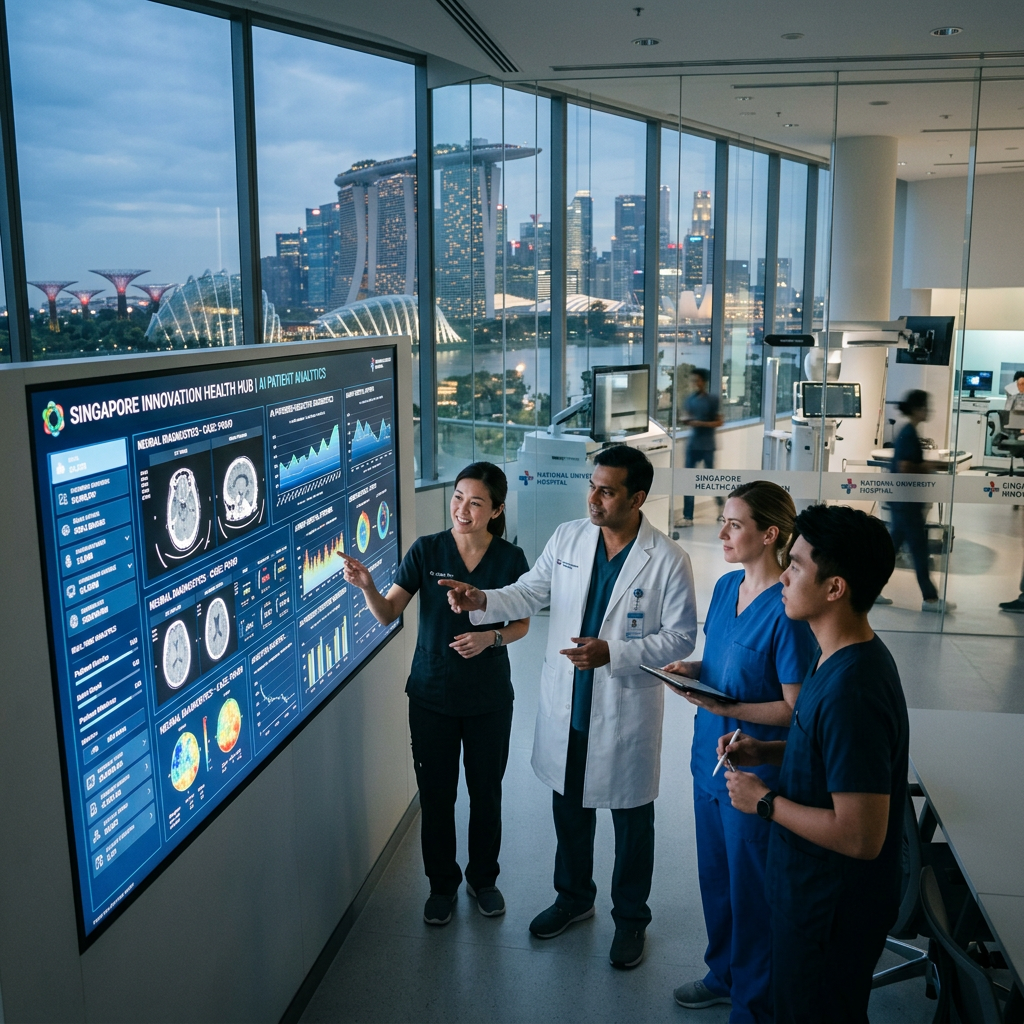
The most visible examples of AI in healthcare Singapore often appear in diagnostics. AI systems can analyze medical images and detect patterns associated with disease, sometimes helping clinicians identify issues faster or with more consistency. In fields such as radiology, ophthalmology, and pathology, machine learning tools are being explored and deployed to support doctors in reading scans and recognizing abnormal findings.
This matters because imaging is one of the most data-heavy parts of medicine. A busy hospital may process large volumes of scans every day, and any tool that helps prioritize urgent cases or flag suspicious findings can improve patient care. In Singapore, where healthcare institutions emphasize both clinical excellence and operational efficiency, AI-assisted imaging is a natural fit.
AI is also useful beyond diagnosis. Hospitals can use predictive tools to forecast patient admissions, identify high-risk individuals, and allocate resources more effectively. For example, AI systems may help determine which patients are more likely to deteriorate, need closer monitoring, or benefit from earlier intervention. These capabilities can support doctors and nurses in making timely decisions in high-pressure environments.
Chronic disease management is another area where Singapore medical AI has growing potential. Wearable devices, home monitoring tools, and digital health platforms can generate continuous streams of health data. AI can help interpret this information and identify signs that a condition may be worsening. For patients with diabetes, cardiovascular disease, or respiratory illness, that could translate into earlier treatment and fewer emergency complications.
In biomedical science, Singapore’s research institutions and universities are also applying AI to areas such as genomics, drug discovery, and precision medicine. By analyzing large datasets more efficiently, AI can help researchers identify biological markers, study disease patterns, and accelerate the development of targeted therapies. This is especially relevant in a country that has invested heavily in becoming a hub for biomedical innovation.
Examples of AI use and development in Singapore commonly involve a mix of stakeholders:
- Public hospitals and healthcare clusters exploring clinical AI applications.
- Universities and research institutes conducting machine learning and biomedical data science research.
- Health technology startups developing digital tools for diagnostics and patient care.
- Government agencies supporting digital transformation, research, and responsible innovation.
Together, these efforts show that AI research Singapore is not limited to laboratory theory. It is increasingly tied to practical healthcare outcomes.
The Scientific Benefits of AI in Healthcare Singapore
The biggest scientific advantage of AI in healthcare is its ability to process complex data rapidly and identify patterns that may not be obvious at first glance. In medicine, that can support earlier diagnosis, better risk assessment, and more informed treatment planning. For a healthcare system like Singapore’s, where high standards and efficiency are both essential, these benefits are especially attractive.
One major benefit is improved diagnostic support. AI tools can help clinicians analyze imaging, pathology slides, and other data sources with greater speed. This can be especially useful when demand is high or when subtle signs of disease are difficult to spot. Faster recognition of potential problems can lead to earlier intervention, which often improves health outcomes.
Another important benefit is stronger operational efficiency. Healthcare workers already manage intense workloads, and hospitals must constantly balance staffing, bed availability, and patient flow. AI can help optimize some of these processes by predicting demand, identifying bottlenecks, and assisting with triage decisions. In this way, healthcare technology Singapore developments may support both patient care and workforce sustainability.
AI also strengthens preventive health. Instead of waiting until a patient becomes seriously unwell, predictive analytics can help identify people who may be at elevated risk. This is particularly valuable for chronic diseases that are common in many developed societies, including Singapore. Earlier detection and intervention can reduce long-term complications and improve quality of life.
Personalization is another promising area. Patients do not all respond to disease or treatment in the same way. AI can help analyze individual differences in symptoms, medical history, and biological data, potentially leading to more tailored care. Over time, this could support a shift toward more precise and patient-centered medicine.
The benefits of AI in healthcare Singapore can be summarized as follows:
- Faster diagnosis through rapid data analysis.
- Better accuracy support for image-based and pattern-based assessments.
- Earlier disease detection and stronger preventive care.
- Improved hospital efficiency and smarter resource use.
- More personalized treatment based on individual data.
- Potential cost savings through better planning and reduced complications.
For Singapore, these benefits extend beyond medicine itself. Better healthcare outcomes can support economic productivity, social stability, and confidence in public institutions. That is why the topic sits at the intersection of science, policy, and national development.
Challenges, Risks and Ethical Questions
Despite its promise, AI in healthcare also raises serious challenges. Scientific innovation does not automatically guarantee trust, fairness, or safety. In medicine, where decisions affect human lives directly, the stakes are especially high. Singapore’s progress in healthcare innovation must therefore be matched by careful governance and ethical oversight.
One of the most important concerns is data privacy. AI systems often depend on large amounts of health data, which may include highly sensitive personal information. Patients need assurance that their data is stored securely, used responsibly, and protected from misuse. In a digitally advanced society like Singapore, public trust will be essential to the long-term success of AI-enabled healthcare.
Another concern is algorithmic bias. AI systems learn from existing data, and if that data is incomplete or unrepresentative, the results may not be equally accurate for all groups. In healthcare, this can create risks of unfair or inconsistent outcomes. Developers and institutions must therefore test systems carefully and ensure they perform reliably across diverse populations.
Human oversight is also critical. AI can support clinical judgment, but it should not replace the responsibility of trained medical professionals. Doctors and nurses bring context, empathy, and ethical reasoning that machines cannot replicate. The most effective healthcare models are likely to be those where AI augments human expertise rather than attempting to remove it.
Singapore will also need to continue addressing broader questions around regulation, accountability, and implementation. These include:
- Who is responsible if an AI-assisted decision leads to harm?
- How should systems be validated before clinical use?
- What level of transparency should patients receive about AI involvement?
- How can healthcare workers be trained to use these tools effectively?
- How should innovation be balanced with caution and public trust?
These are not reasons to reject AI. Rather, they show why responsible innovation matters. The success of Singapore healthcare innovation will depend not only on technical excellence but also on governance, ethics, and communication with the public.
Singapore Research and Innovation Shaping the Future
Singapore has spent years building a strong ecosystem for scientific research, biotechnology, and digital development. This creates fertile ground for AI in healthcare to grow. Local universities, research institutes, hospitals, startups, and public agencies all contribute to an environment where ideas can move from research to real-world application.
One reason this matters is that healthcare AI is most effective when it is shaped by local needs. Singapore has its own healthcare priorities, demographic trends, infrastructure strengths, and regulatory environment. Local research helps ensure that AI tools are relevant to the population they are meant to serve. It also allows Singapore to contribute knowledge and solutions to the wider region.
AI research Singapore efforts are likely to play an important role in several areas. Biomedical data science can help researchers better understand disease mechanisms and patient variation. Precision medicine programs can benefit from AI analysis of genomic and clinical data. Public health systems can use AI to improve surveillance, preparedness, and intervention planning. Over time, these advances could make Singapore an even stronger regional leader in health technology.
Innovation in this field also has economic significance. As global demand grows for digital health solutions, countries that build strong research and commercialization pipelines may gain strategic advantages. For Singapore, that could mean attracting investment, supporting startups, creating high-value jobs, and strengthening its reputation as a knowledge-driven economy.
Key drivers of progress in Singapore science and healthcare technology include:
- Strong public investment in research and innovation.
- Collaboration across sectors including academia, government, and industry.
- Advanced digital infrastructure that supports data-driven systems.
- A policy environment that encourages responsible experimentation.
- A skilled workforce in science, medicine, engineering, and data analytics.
This combination gives Singapore an opportunity not just to adopt AI trends but to help shape them.
What AI in Healthcare Means for Everyday Singaporeans
For many readers, the most important question is simple: what does this mean for me and my family? In everyday life, AI in healthcare may not always appear as a visible robot or flashy device. More often, it will work quietly in the background by helping clinicians prioritize urgent cases, identifying early warning signs in test results, or improving how appointments and treatment plans are managed.
For patients, that could mean shorter waiting times in some settings, faster interpretation of scans, and more targeted follow-up care. For people living with chronic disease, AI-enabled monitoring tools may support more proactive management. For older adults and caregivers, predictive tools could help identify risks earlier and reduce avoidable complications.
AI may also improve communication and accessibility if used thoughtfully. Digital health applications can support appointment reminders, symptom tracking, and health education. When combined with good clinical care, these tools can make healthcare more responsive and convenient. In a fast-paced society like Singapore, where efficiency and accessibility are highly valued, these practical gains matter.
At the same time, everyday Singaporeans should remain informed rather than simply assuming all technology is beneficial by default. Public understanding is important because healthcare decisions involve trust, consent, and confidence in institutions. As AI becomes more common, readers will benefit from asking sensible questions about data use, evidence, safety, and human oversight.
In simple terms, the benefits Singapore readers may notice most include:
- More efficient care journeys from screening to follow-up.
- Earlier alerts for certain health risks.
- Better support for chronic disease management.
- Potentially more personalized treatment plans.
- Improved hospital efficiency during periods of high demand.
When implemented responsibly, these changes can make healthcare feel not only more advanced, but also more practical and patient-centered.
The Future of AI in Healthcare Singapore
The future of AI in healthcare Singapore will likely involve deeper integration across prevention, diagnosis, treatment, and long-term care. Instead of isolated tools performing narrow tasks, the next stage may involve more connected systems that help healthcare providers make better decisions at multiple points in the patient journey.
One likely development is broader use of AI in preventive health. As wearables, digital records, and screening data become more integrated, AI may help identify risk patterns before disease becomes severe. This could support healthier ageing, a major priority for Singapore as its population structure changes over time.
Another area of growth is likely to be precision medicine. As researchers learn more about genetics, biomarkers, and individualized treatment responses, AI can help connect complex data to clinical action. This could improve treatment selection and open the door to more targeted interventions.
Hospitals may also become smarter in operational terms. AI could support bed management, emergency department flow, staffing forecasts, and supply planning. These behind-the-scenes improvements may not always make headlines, but they can have a major effect on care quality and resilience.
Still, the future will depend on balance. Singapore will need to continue combining innovation with strong safeguards. Trust, transparency, and professional accountability will be just as important as technical capability. The countries that succeed most in healthcare AI may not be those that move the fastest, but those that move the most responsibly.
Key Takeaways
AI is becoming an important part of modern medicine, and Singapore is well placed to benefit from this transformation. With strong institutions, advanced research capabilities, and a national focus on digital innovation, the country has the ingredients needed to develop and apply healthcare AI effectively.
The science behind AI in healthcare offers real advantages, from faster diagnosis and earlier disease detection to better hospital efficiency and more personalized care. At the same time, these benefits come with important responsibilities involving data privacy, fairness, regulation, and human oversight.
For Singaporeans, this is not just a niche technology story. It is a public health story, an economic story, and a quality-of-life story. The choices made today in research, governance, and implementation will shape how useful and trustworthy AI-enabled healthcare becomes in the years ahead.
Conclusion: A Smarter Healthcare Future for Singapore
AI in healthcare Singapore is more than a passing trend. It is part of a broader scientific shift in how health systems understand disease, deliver care, and plan for the future. For a country that values innovation, resilience, and long-term strategy, this is a natural area of focus.
If developed responsibly, AI can help Singapore improve diagnosis, strengthen preventive care, support healthcare workers, and deliver better outcomes for patients. Yet the most meaningful progress will come from combining technological sophistication with ethical safeguards and public trust.
As Singapore science and healthcare innovation continue to evolve, readers should watch this space closely. The future of medicine in Singapore will not be shaped by technology alone, but by how wisely the country chooses to use it.