






All family matter
ByExplorer
AI in Singapore: How Artificial Intelligence Is Shaping Urban Planning
Share your love
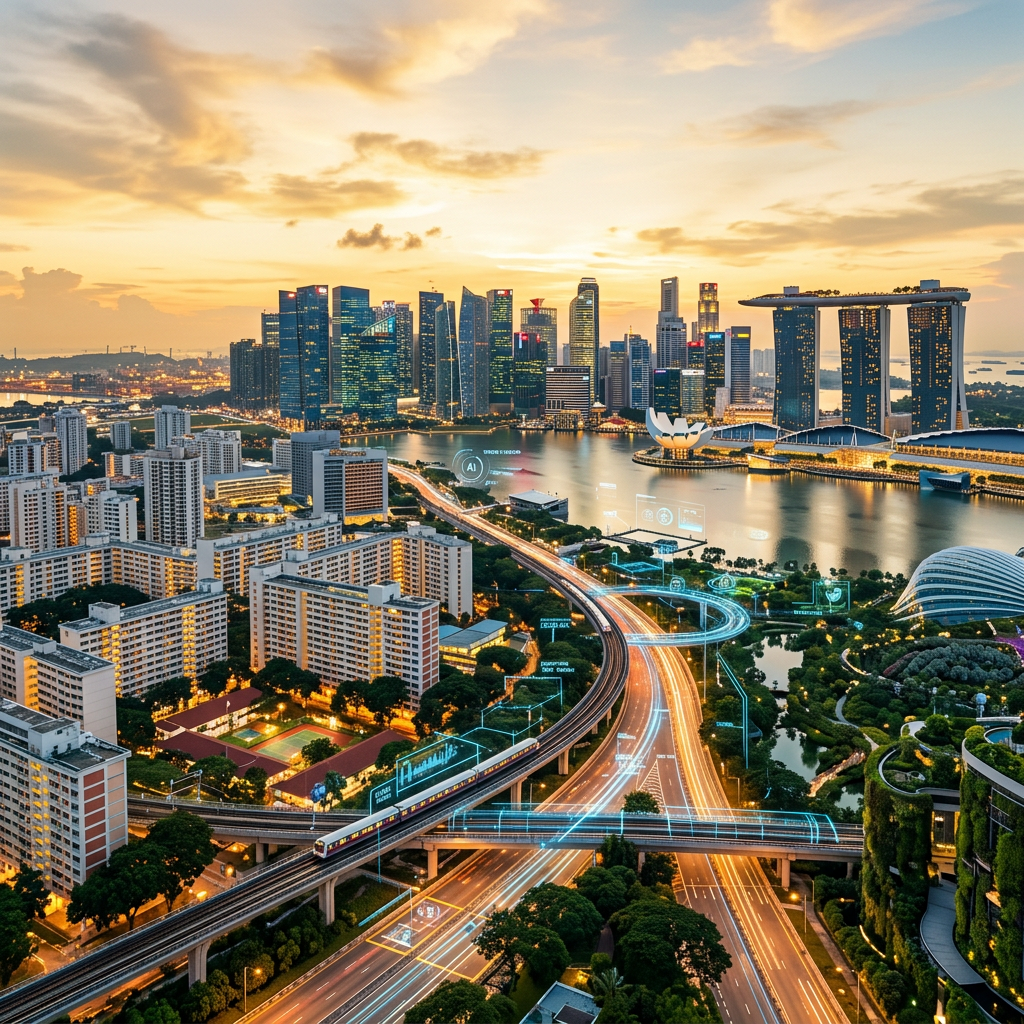
Singapore’s reputation for efficient city planning did not happen by accident. As one of the world’s most densely populated urban environments, the country has long relied on careful coordination, long-term policymaking, and smart infrastructure investment to stay liveable and competitive. Today, a new force is helping shape that next phase of growth: artificial intelligence. For readers following Singapore technology, AI is no longer just a business buzzword. It is increasingly becoming part of how cities are designed, managed, and improved.
The rise of AI in Singapore is especially relevant in urban planning because the city-state faces unique pressures. Land is limited, transport systems must remain reliable, housing demand needs to be balanced carefully, and sustainability goals are becoming more urgent. In this context, artificial intelligence Singapore initiatives offer a practical advantage. AI can process large datasets, identify patterns, forecast needs, and support faster decisions in areas ranging from traffic management to energy efficiency. As digital transformation Singapore continues to accelerate, urban planning stands out as one of the clearest examples of technology creating visible public value.
Why AI Is a Major Singapore Technology Trend
AI has become one of the most important Singapore technology trends because it helps solve real and immediate challenges. Unlike technologies that remain limited to niche business use cases, AI in Singapore is being applied across public services, transport, urban design, and environmental management. This makes it highly relevant to government agencies, businesses, and residents alike. The growing attention around artificial intelligence Singapore efforts also reflects the country’s wider ambition to stay competitive as a global innovation hub.
Part of the reason AI is receiving so much attention is that Singapore already has many of the conditions needed to support adoption. The country has invested heavily in digital infrastructure, sensor networks, connectivity, data platforms, and public-private innovation partnerships. These foundations make it easier to test and deploy AI tools at scale. In many ways, AI is not appearing in isolation. It is building on years of investment under the broader digital transformation Singapore agenda.
Urban planning makes this trend especially tangible. Instead of relying only on historical reports and manual modelling, planners can now use AI to process real-time and historical data from transport systems, buildings, utilities, and public spaces. This allows them to better understand how the city functions on a day-to-day basis and where improvements are needed. For example, predictive models can highlight likely congestion hotspots, while machine learning systems can improve maintenance planning for public infrastructure.
The relevance of AI urban planning Singapore solutions also reflects rising expectations among citizens and businesses. People want cities that are more efficient, sustainable, and responsive. Companies want infrastructure that supports productivity and talent attraction. AI helps align those goals by making urban systems more adaptive. That is why AI has moved from being one of many tech trends Singapore observers discuss to becoming a core part of the national conversation about future readiness.
How AI Supports Singapore’s Smart Nation Vision
To understand the role of AI in urban planning, it is important to place it within the broader context of Smart Nation Singapore. The Smart Nation initiative aims to improve quality of life, strengthen economic opportunity, and make public services more seamless through digital technology. AI fits naturally into that vision because it helps transform raw data into actionable insight. Instead of simply collecting information, agencies can use AI to anticipate needs, improve decision-making, and respond more quickly to changing conditions.
In practical terms, this matters because modern cities generate enormous volumes of data. Sensors, cameras, public transport systems, building management tools, and digital services all create streams of information that can be difficult to interpret manually. AI can help identify trends across those sources and support more coordinated planning. In a highly urbanised country like Singapore, that capability is especially valuable. It enables city planners and policymakers to make better use of limited space while improving public outcomes.
One major area where this support is visible is mobility. AI can analyse commuting patterns, forecast peak demand, and help optimise transport routes and scheduling. This contributes to smoother movement across the city and can reduce pressure on roads and public transport networks. It also supports longer-term planning by showing where future housing or commercial development may require stronger transport links.
AI also supports Smart Nation Singapore goals through environmental and municipal management. Systems can be used to monitor energy use, assess heat patterns, predict waste generation, and improve the maintenance of public assets. These applications matter because Singapore’s urban strategy increasingly depends on balancing growth with sustainability. By making planning more data-driven and dynamic, AI helps the city move closer to that balance.
Just as importantly, AI strengthens coordination. Urban planning involves many stakeholders, from transport authorities and housing agencies to sustainability teams and private developers. AI-powered analysis can help these groups work from more consistent insights, improving alignment across projects. In this way, artificial intelligence Singapore efforts do more than automate tasks. They support a more connected and responsive approach to city governance.
Real-World Applications of AI in Singapore Urban Planning
The strongest case for AI in Singapore lies in its real-world applications. Urban planning is not just about drawing maps or approving new developments. It is about understanding how people, infrastructure, services, and the environment interact over time. AI helps make those interactions more visible and measurable, which can improve both short-term decisions and long-term strategy.
One important application is traffic and transport optimisation. Singapore’s transport systems are already advanced, but AI can help make them even more efficient. By analysing live traffic data, commuter flows, weather conditions, and special event patterns, AI systems can support better route planning and operational adjustments. This can reduce congestion, improve travel time reliability, and make public transport more responsive to actual demand.
Another application is land-use planning. In a land-scarce environment, every planning decision carries significant trade-offs. AI can support planners by modelling different development scenarios and forecasting their likely effects on transport, amenities, population density, and environmental impact. This makes it easier to evaluate options before major resources are committed. For a country where strategic land allocation is central to long-term stability, this is one of the most valuable forms of AI urban planning Singapore can adopt.
Building and infrastructure management is another area of growing importance. AI can help detect patterns that suggest future maintenance issues in public assets, from transport infrastructure to utilities and building systems. Instead of waiting for failures to occur, agencies can shift toward preventive maintenance. That improves efficiency, reduces service disruptions, and supports more responsible use of public funds.
Environmental planning also benefits from AI. Singapore’s urban future depends on managing heat, emissions, greenery, water systems, and energy consumption more effectively. AI tools can support climate modelling, identify environmental stress points, and help optimise resource allocation. This is especially relevant as sustainable urban planning becomes a larger part of Singapore technology and policy discussions.
Together, these examples show that AI in Singapore is not limited to abstract innovation. It is already influencing how the city plans, operates, and adapts. That makes it one of the most practical and compelling examples of digital transformation Singapore is currently experiencing.
Benefits of AI for Singaporean Businesses and Residents
The benefits of AI in urban planning are not limited to policymakers and technical teams. They extend to businesses, residents, and the broader economy. For businesses, better planning can mean smoother logistics, more reliable transport, stronger infrastructure, and a more attractive operating environment. For residents, it can mean shorter commutes, better public services, more liveable neighbourhoods, and improved sustainability.
One major benefit is efficiency. AI allows planners to process far more data than would be possible through manual review alone. This can speed up decisions, reduce bottlenecks, and help agencies respond faster to emerging issues. In a fast-moving city like Singapore, where time and space are both valuable, efficiency matters. It supports not only convenience but also economic performance.
Another benefit is better decision-making. AI does not replace human judgement, but it can provide planners with clearer evidence and stronger forecasts. This is important in a complex urban environment where a single planning decision may affect housing, transport, business activity, and environmental outcomes at the same time. Better insight leads to better trade-offs, and that ultimately creates more resilient urban systems.
There is also a strong sustainability angle. As Singapore pursues greener growth, AI can help optimise energy use, improve urban cooling strategies, and support more efficient use of resources. That means artificial intelligence Singapore initiatives can contribute not only to innovation goals but also to long-term environmental priorities.
For businesses, especially in sectors like real estate, construction, logistics, mobility, and smart infrastructure, the spread of AI opens up new opportunities. Companies that align with these developments may find ways to innovate faster, collaborate more effectively with government initiatives, and create services suited to a smarter urban economy. This is one reason why tech trends Singapore increasingly overlap with planning and sustainability issues.
Challenges: Data, Talent, Trust, and Governance
Despite its promise, AI in Singapore urban planning is not without challenges. The first is data quality and integration. AI systems depend on reliable, well-structured data, but urban data often comes from many different sources with varying standards. If information is incomplete, biased, or poorly integrated, the resulting analysis may be less useful or even misleading.
A second challenge is talent. Effective AI implementation requires data scientists, engineers, planners, policy experts, and operational teams who understand both the technology and the local urban context. Building that combination of skills takes time. Singapore has made progress in strengthening digital capabilities, but competition for AI talent remains intense across both public and private sectors.
Trust is another key issue. Residents may support smarter city services, but they also expect responsible handling of data, fairness in automated systems, and clear accountability when AI influences decisions. In urban planning, where outcomes affect communities directly, transparency matters. Agencies and organisations must be able to explain how AI tools are used and ensure that technology supports public interest rather than undermining it.
Governance and cybersecurity also deserve close attention. AI systems operating in urban contexts may touch sensitive infrastructure and high-value datasets. That creates potential risks related to privacy, resilience, and misuse. Strong governance frameworks, cybersecurity safeguards, and ethical standards are therefore essential. As Singapore pushes further into digital transformation, responsible AI adoption will be just as important as innovation itself.
These challenges do not weaken the case for AI. Instead, they show why implementation needs to be strategic. Singapore’s success with artificial intelligence in urban planning will depend not only on technical capability but also on strong institutions, clear oversight, and thoughtful public engagement.
What Singapore Organisations Should Do Next
For organisations looking to contribute to or benefit from AI urban planning Singapore initiatives, the most effective starting point is clarity. Rather than adopting AI simply because it is trending, agencies and businesses should identify specific problems that need solving. This could include traffic forecasting, maintenance planning, sustainability monitoring, or land-use modelling. Focused use cases are far more likely to deliver measurable value than broad, undefined experimentation.
The next priority is data readiness. Organisations need to assess what data they already have, how reliable it is, and whether it can be integrated across teams or systems. Without a strong data foundation, even the best AI tools will struggle to produce meaningful results. In many cases, success begins with improving data quality and governance before deploying more advanced models.
Upskilling is equally important. Urban planning teams do not all need to become AI engineers, but they do need enough understanding to interpret outputs, ask critical questions, and work effectively with technical specialists. Cross-functional collaboration is often what determines whether AI becomes truly useful in planning settings.
Finally, organisations should treat governance as a core part of implementation rather than an afterthought. Clear rules on privacy, accountability, security, and human oversight help build trust and reduce risk. For Singapore businesses AI adoption opportunities will continue to grow, but lasting success will come from combining innovation with responsibility.
The Future of AI in Singapore Urban Planning
Looking ahead, AI is likely to become even more deeply embedded in how Singapore plans and manages its urban environment. As datasets become richer and tools become more sophisticated, planners may be able to simulate development scenarios with greater precision, personalise public services more effectively, and coordinate infrastructure investments more strategically.
This future is especially significant because Singapore serves as both a city and a nation. Urban planning decisions have broad implications for economic competitiveness, social cohesion, climate resilience, and daily quality of life. If AI is deployed thoughtfully, it can help Singapore respond more quickly to changing needs while preserving the long-term discipline that has defined its development model.
The wider significance is that AI urban planning Singapore efforts may also shape how other cities think about digital governance. Singapore’s combination of strong institutions, advanced infrastructure, and clear policy direction gives it a unique opportunity to lead. For anyone tracking Singapore technology, this makes AI in urban planning one of the most important stories to watch in the years ahead.
Key Takeaways
- AI in Singapore is becoming a major force in urban planning because it helps solve real challenges related to land use, mobility, sustainability, and infrastructure.
- Smart Nation Singapore initiatives provide a strong foundation for adopting AI across public services and city management.
- Real-world applications include traffic optimisation, land-use forecasting, infrastructure maintenance, and environmental planning.
- The benefits of AI include better efficiency, stronger decision-making, improved sustainability, and more liveable urban environments.
- Singapore must still address data quality, talent shortages, trust, governance, and cybersecurity to scale AI responsibly.
- Organisations that focus on practical use cases, data readiness, and ethical implementation will be best placed to benefit.
Singapore’s next chapter in digital transformation will not be defined only by faster apps or smarter devices. It will also be defined by how well the country uses artificial intelligence to shape the places where people live, work, and move. If you found this look at Singapore technology useful, share the article, leave a comment with your views on AI in Singapore, and join the conversation on what smarter urban planning should look like next.