






All family matter
ByExplorer
Bolivia – The World’s Giant Mirror
Share your love
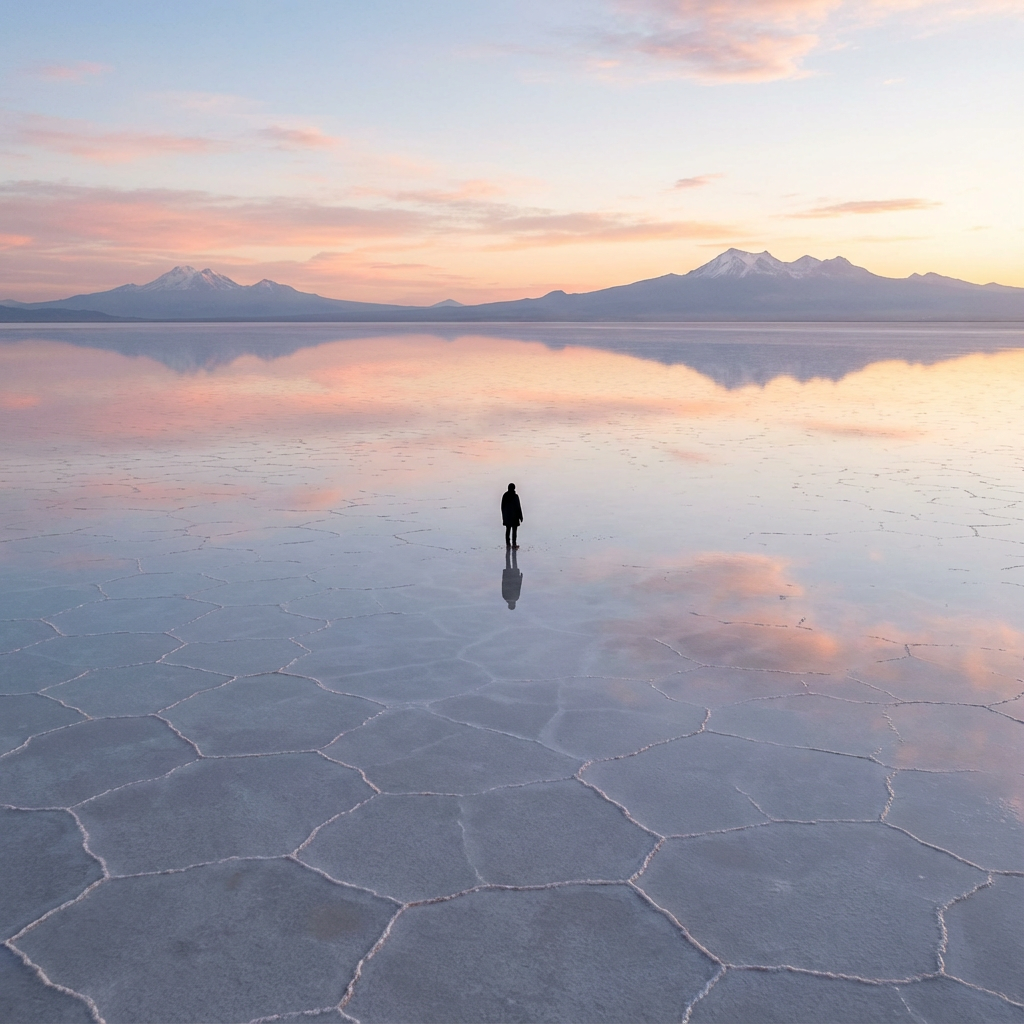
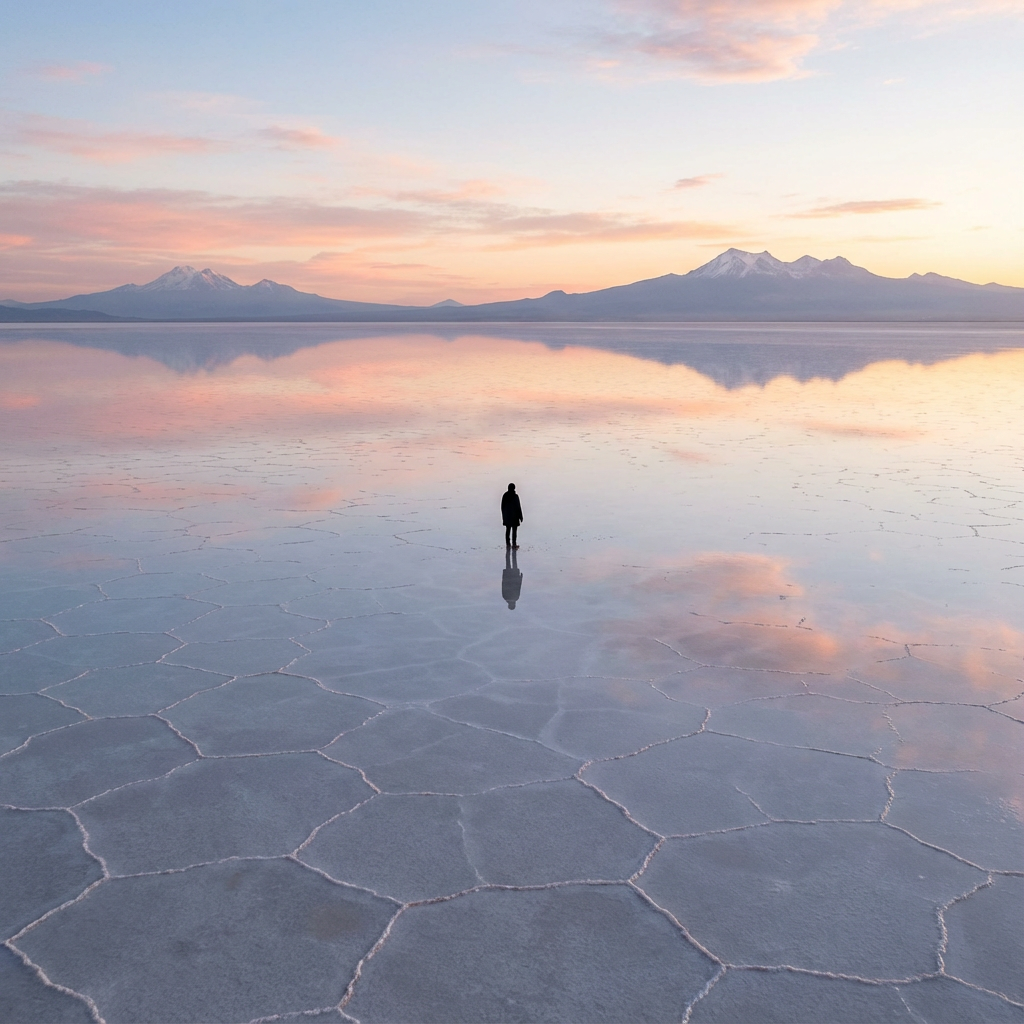
High in the Bolivian Andes, at an altitude of around 3,650 meters (nearly 12,000 feet), lies Salar de Uyuni, the world’s largest salt flat. Spreading over more than 10,000 square kilometers, it’s a blindingly white expanse of hexagonal salt patterns that feels endless when you stand in the middle. In the rainy season, a thin layer of water transforms this landscape into a near-perfect mirror, reflecting the sky so clearly that the horizon disappears. It’s one of the strangest places on Earth because there are very few other locations where you can walk in an environment that looks like you’re standing between two skies.
The salt flat was formed from prehistoric lakes that evaporated, leaving behind a thick crust of salt and minerals. Today, this crust is so flat that it’s used to calibrate satellite altimeters. Under the surface lies a vast reserve of lithium, but above ground you’ll see salt workers carving blocks by hand, tiny “islands” of rock dotted with cactus, and 4×4 jeeps crossing the expanse in convoy. Despite its remote feel, Salar de Uyuni is one of Bolivia’s most visited destinations and is usually explored on guided tours departing from the town of Uyuni.
Why It Feels So Otherworldly
What makes Salar de Uyuni particularly surreal is how it changes with the seasons. In the dry season (roughly May to November), you see an immense, cracked, snow-white surface stretching in all directions. The geometric patterns formed by dried salt make the landscape look like a gigantic tiled floor. In the wet season (roughly December to March, depending on rainfall), a shallow layer of water—often just a few centimeters deep—turns the salt into a reflective surface. The sky, clouds, and mountains are mirrored so perfectly that photos taken here often look edited, even when they’re not.
The emptiness is another reason this place feels so unusual. There are almost no trees, no buildings in sight once you’re out in the middle, and very little visual reference for distance. As a result, you can play with perspective in photos—tiny people “standing” on props, giant llamas, and people “holding” jeeps in their hands. It’s both a photographer’s dream and a reminder of how extreme natural environments can be.
How to Visit Salar de Uyuni
Most travelers reach the salt flats via the town of Uyuni, a small but busy hub in southwestern Bolivia. You can get to Uyuni by:
- Bus from major Bolivian cities such as La Paz, Potosí, or Sucre
- Domestic flight from La Paz (fast but more expensive)
From Uyuni, you typically join a guided jeep tour. Options range from:
- 1-day tours – Focus mainly on the salt flats themselves, the famous “train cemetery” (Cementerio de Trenes) near Uyuni, and sometimes a sunset on the flats.
- 3-day tours – Continue beyond the salt flats into the Eduardo Avaroa Andean Fauna National Reserve, with colorful lagoons, geysers, hot springs, and high-altitude desert landscapes.
- 4+ day tours – Often combine the salt flats with routes that end or begin across the border in Chile (e.g., San Pedro de Atacama).
Tours usually include transport, a driver/guide, meals, and basic accommodation (often in simple guesthouses or “salt hotels” where some of the building is made from salt blocks).
Best Time to Go
When you visit depends on what kind of experience you want, and this is important to decide when planning a trip to one of the strangest places on Earth:
- Mirror effect (wet season):
- Approx. December to March
- You’re more likely to see the legendary reflective surface after rains.
- Some areas may be inaccessible if flooding is heavy, and it can be colder and windier.
- Dry, patterned salt flats (dry season):
- Approx. May to November
- The surface is usually fully exposed, with clear hexagonal salt formations.
- Easier driving conditions and better access to different parts of the flats.
- Nights can be very cold, especially in June–August.
Shoulder months (April and November) can sometimes offer a bit of both, but weather is never guaranteed. It’s worth checking recent conditions with tour companies before you go.
Practical Tips and Safety
Because Salar de Uyuni is at high altitude and far from large cities, some advance planning makes a big difference:
- Altitude: At over 3,600 meters, altitude sickness is a real risk. Spend time acclimatizing in places like La Paz or Potosí before heading to Uyuni, drink plenty of water, and avoid heavy exercise on your first day.
- Clothing: Bring layers, including a warm jacket, gloves, and hat. Even in sunny weather, it can be cold, and temperatures drop sharply at night.
- Sun protection: The combination of altitude, reflection from the white salt, and clear skies makes sunburn very likely. Use high SPF sunscreen, sunglasses with UV protection, and a hat.
- Footwear: Waterproof or at least water-resistant shoes are helpful, especially in the wet season when shallow water covers parts of the flats.
- Photography gear: If you’re bringing a camera, consider protection against salt and moisture—plastic covers, dry bags, and microfiber cloths to wipe lenses.
When choosing a tour operator, look for companies with a good safety record, well-maintained vehicles, and clear policies on responsible travel (such as proper waste disposal and fair treatment of drivers and guides).